Source Swivel Caster with Side Brake for Factory, Hospital, and Warehouse
Compare 30 swivel caster with side brake options featuring PU, nylon, and rubber wheels. Buyers can review specifications like wheel sizes, load capacities, and braking modes from Chinese manufacturers.
Key considerations
Products List




Comprehensive Sourcing Guide
Strategic Sourcing Guide for Swivel Casters with Side Brakes
Procuring industrial swivel casters equipped with side brakes requires a rigorous approach to technical verification and supplier validation. The core keyword "swivel caster with side brake" represents a critical component in material handling, where the ability to lock a wheel in both rotation and direction is paramount for safety and operational stability. Buyers must navigate a complex landscape of material compositions, load capacities, and braking mechanisms to ensure the selected hardware meets specific operational demands. This guide outlines the essential factors for sourcing these components, grounded in observed market data and technical specifications.
Technical Specifications and Material Composition
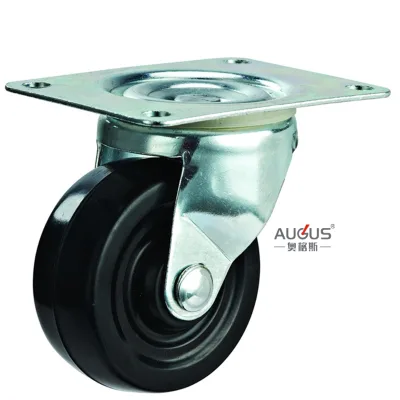
The foundation of a reliable swivel caster lies in its material composition and dimensional specifications. The market presents a diverse array of wheel materials, each offering distinct performance characteristics. Polyurethane (PU) is a frequently observed material, noted for its durability and floor protection capabilities. In specific product listings, PU wheels are paired with zinc-plated housings, providing a balance of corrosion resistance and structural integrity. Conversely, Nylon (NP) casters are available, often specified for heavy-duty applications where high load-bearing capacity is required. The observed data indicates a standard wheel size range extending from 1.5 inches up to 8 inches, with specific models offering diameters of 100mm, 125mm, 150mm, and 200mm.
The braking mechanism is the defining feature of this category. The "side brake" designation typically refers to a lever or pedal located on the side of the caster housing that engages the wheel to prevent rotation. However, the market also includes variations such as total lock brakes and swivel brakes. Buyers must verify the specific brake mode, as some units offer a side brake while others provide a total lock or a combination of swivel and wheel locking. The housing material is equally critical; steel housings with black lacquer or blue zinc plating are common observations, ensuring the structural frame can withstand the shear forces generated during braking. The standard packing for these units often involves non-fumigation cartons or standard carton packing, which is essential for logistics and compliance with international shipping regulations.
Load Capacity and Dimensional Standards
Load capacity is a primary determinant in the selection process, directly influencing the safety margin of the equipment. Observed data suggests a loading capacity range of 300 to 550 kg per caster, though this varies significantly based on wheel diameter and material. For instance, larger diameter wheels, such as the 4-inch to 8-inch PU casters, are generally associated with higher load ratings compared to the 1.5-inch to 3-inch models. Dimensional standards also play a crucial role in compatibility. The overall height of the caster assembly can range from 143mm to 240mm, while the width is often standardized at 50mm.
When evaluating specifications, buyers should cross-reference the model numbers with the stated dimensions. Specific models like 114716 and 122210 are associated with distinct wheel size ranges, such as 1.5" to 3" or 2.5" to 5". It is imperative to verify that the selected caster fits the mounting plate dimensions of the intended equipment. The standard product dimensions for certain models are listed as 572916, which likely refers to the mounting plate or housing footprint. Failure to match these dimensions can lead to installation failures or compromised structural integrity. Additionally, the wheel width is a fixed specification in some contexts, such as 50mm, which affects the stability and contact patch on the floor.
Compliance, Certification, and Safety Verification
While specific certification statuses are not universally confirmed for all listed products, buyers must prioritize compliance verification. The market data references ISO 9001 as a background standard, suggesting that quality management systems are a relevant consideration for suppliers. However, buyers should not assume certification without direct verification from the manufacturer. Instead, the procurement strategy should focus on requesting valid quality management certificates and material safety data sheets (MSDS) for the wheel materials, particularly for PU and Nylon compounds.
Safety standards regarding the braking mechanism are critical. The side brake must be tested for its ability to hold the rated load under various conditions, including inclined surfaces. Buyers should inquire about the testing protocols used to validate the brake's holding power. Although specific test results are not provided in the general data, the presence of "With Brake" and "Without Brake" options in product listings indicates that the braking function is a configurable attribute that requires explicit confirmation. Furthermore, the origin of the product, primarily from China and specifically Guangdong, implies that buyers should be aware of the manufacturing standards prevalent in that region and ensure they align with the destination country's safety regulations.
Cost Drivers and Pricing Dynamics
The pricing of swivel casters with side brakes is influenced by several key variables, including material type, wheel size, and customization options. The observed price range in the market spans from 0.1 to 15 USD, a wide spectrum that reflects the diversity of product quality and specifications. Smaller, non-customized units with basic materials like Nylon or standard PU tend to fall at the lower end of this range. In contrast, larger casters with specialized finishes, such as zinc plating, and higher load capacities command higher prices.
Customization is a significant cost driver. The availability of customization options allows buyers to tailor the caster to specific needs, such as unique mounting configurations or specialized brake mechanisms. However, customized orders often come with higher Minimum Order Quantities (MOQ), which can range from 1 to 5000 units. Buyers must balance the cost benefits of bulk purchasing against the flexibility required for their specific projects. Additionally, the condition of the product is a factor; while most listings imply new inventory, the presence of "Used" condition items in the data suggests a secondary market exists, which may offer cost savings but introduces risks regarding wear and tear on the braking mechanism.
Supplier Evaluation and Quality Control
Evaluating suppliers for swivel casters requires a focus on their ability to maintain consistent quality and provide accurate technical data. The origin of the products, predominantly from China, necessitates a thorough vetting process. Buyers should verify the supplier's production capabilities, specifically their ability to handle surface treatments like zinc plating and the application of black lacquer or blue zinc plating on steel housings. The consistency of these finishes is crucial for corrosion resistance and aesthetic uniformity.
Quality control measures should be a central part of the supplier evaluation. Buyers must request detailed inspection reports that cover dimensional accuracy, load testing, and brake functionality. The presence of alternative wheel materials, such as PU, PA, Rubber, PVC, and PP, indicates that suppliers should have the flexibility to source high-quality raw materials. It is essential to confirm that the "Np" material mentioned in some listings refers to Nylon and meets the required mechanical properties. Furthermore, the packaging method, whether non-fumigation or standard carton, should be verified to ensure it meets the logistical requirements of the buyer's supply chain.
Typical Applications and Long-Term Procurement Considerations
Swivel casters with side brakes are ubiquitous in industries requiring precise control over heavy loads. Common applications include medical equipment, industrial carts, warehouse racking, and manufacturing machinery. The side brake is particularly valuable in environments where equipment must remain stationary during loading or unloading, or where safety is a primary concern. The specific model numbers, such as the AGS-Z SERIES, often correspond to specialized applications where specific wheel sizes and load capacities are required.
Long-term procurement considerations involve the total cost of ownership, not just the initial purchase price. Buyers should consider the lifespan of the wheel material and the durability of the brake mechanism. PU wheels generally offer a longer service life on hard floors compared to rubber or nylon, reducing the frequency of replacement. The availability of spare parts, such as brake levers or mounting plates, is also a critical factor. Suppliers that offer a range of wheel sizes from 1.5 inches to 8 inches provide the flexibility to standardize inventory across different equipment lines. Additionally, the lead time and reliability of the supplier in maintaining stock levels for high-demand models like the 4-inch to 8-inch PU casters should be assessed to prevent production delays.
Comparison of Key Product Attributes
To facilitate decision-making, the following table summarizes the key attributes observed in the market for swivel casters with side brakes. This comparison highlights the variations in materials, sizes, and configurations that buyers must consider.
| Attribute | Observation A | Observation B | Observation C |
|---|---|---|---|
| Wheel Material | PU (Polyurethane) | Nylon (NP) | Rubber / PA / PVC / PP |
| Wheel Size Range | 1.5" to 3" | 2.5" to 5" | 4" to 8" |
| Brake Type | Side Brake | Total Lock Brake | Swivel with Brake |
| Housing Finish | Zinc Plated | Black Lacquer | Blue Zinc Plated |
| Load Capacity | 300-550 kg | Varies by Size | Varies by Size |
| Color | Grey / Black | Purplish Red | Standard Steel |
| Packing | Non-Fumigation Carton | Standard Carton | Standard Carton |
| Origin | China (Guangdong) | PRC | China |
This table underscores the importance of matching specific technical requirements with the available product attributes. Buyers must carefully review the model numbers and specifications to ensure the selected caster aligns with their operational needs. By adhering to these guidelines and verifying all technical details, procurement professionals can secure high-quality swivel casters with side brakes that enhance safety and efficiency in their operations.
FAQs
What wheel materials are available for swivel casters with side brake?
Polyurethane, Nylon, and Rubber are common wheel materials observed in the market. Some listings also offer alternative options like PA, PVC, and PP. Buyers should verify the specific material composition to ensure compatibility with their floor type and load requirements.
Which brake modes are available for these industrial casters?
The side brake is a primary mode, but total lock and swivel with brake options also exist. Specific models may feature a side pedal brake or a combination of locking mechanisms. Buyers must confirm the exact brake mode to ensure the caster meets their safety and operational needs.
Can I find casters with a load capacity of 300 to 550 kg?
Yes, observed data indicates a loading capacity range of 300 to 550 kg per caster. This capacity varies based on wheel diameter and material composition. Larger wheels generally support higher loads, so verify the specific model number against your equipment requirements.
How are these casters typically packed for international shipping?
Standard packing often involves non-fumigation cartons or standard carton packing. This packaging method is essential for logistics compliance and protecting the zinc-plated or lacquered housing during transit. Buyers should confirm the packing details to ensure they meet destination country regulations.
What are the common wheel size options for these units?
Wheel sizes range from 1.5 inches up to 8 inches, with specific models offering diameters of 100mm, 125mm, 150mm, and 200mm. Standard widths are often 50mm. Select the appropriate size based on the required load capacity and the dimensions of your mounting plate.
Where are these swivel casters with side brake typically manufactured?
The primary origin for these products is China, with specific manufacturing hubs in Guangdong. Buyers should verify the supplier location to ensure alignment with their sourcing strategy and to understand the manufacturing standards prevalent in that region for quality assurance.
Is customization available for these caster wheels?
Customization options are available for specific requirements, though some units are non-customized. Custom orders often involve higher minimum order quantities ranging from 1 to 5000 units. Buyers should discuss their specific needs with the supplier to determine feasibility and cost implications.